
Fraunhofer UMSICHT study highlights environmental benefits – and challenges in packaging recycling
- Publicado el 29 de Septiembre de 2026
Interzero, one of Europe’s leading private circular economy service providers and specialists in plastics recycling, saved more than 7.2 million tonnes of primary resources in Germany, Austria, Poland, Italy and Slovenia in 2025 alone by keeping around 2 million tonnes of recyclable materials in the loop. This is equivalent to the average load carried by 13,439 freight trains1. These are the findings of the latest study by the Fraunhofer Institute for Environmental, Safety and Energy Technology UMSICHT.
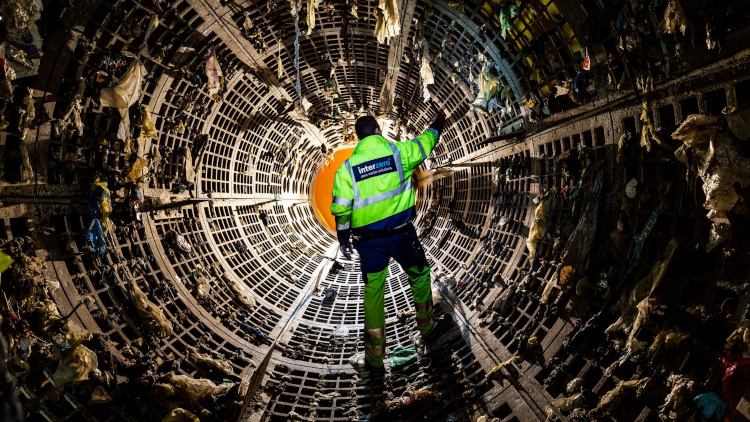
Recycling also avoided more than 900,000 tonnes of greenhouse gas emissions compared with primary production. This equates to around EUR 900 million in avoided climate damage costs when the interests of present and future generations are weighted equally.2
For the first time, the amount of crude oil saved was also determined: by keeping around 1 million tonnes of plastics in the loop, around 3 million barrels of crude oil were saved in 2025. This is equivalent to the volume of around 9.5 million 50-litre tankfuls. “Recycling turns waste back into valuable raw materials for industry. This not only protects the climate and conserves resources, but also reduces our dependence on imports. In this way, the circular economy becomes a key pillar of a sustainable and more self-reliant European economy,” says Jan Kroker, CEO of Interzero. “Europe cannot afford to lose valuable raw materials after a single use.”
Gelber Sack under pressure: Why good recycling often fails at the design stage
Alongside the positive overall figures, the detailed analysis of lightweight packaging collected through Germany’s Gelber Sack system for lightweight packaging waste provides important insights into current trends in the packaging market. The share of composite packaging and sorting residues in the Gelber Sack has increased. Key factors include paper-based packaging with non-separable plastic inner coatings, which is sometimes perceived by the public as sustainable, as well as packaging that poses challenges for proper waste separation, such as plastic containers with cardboard sleeves whose components need to be separated manually by consumers before disposal. Another issue is so-called multilayer packaging, in which plastics with different features are firmly attached.
The study also shows that the share of aluminium in packaging waste has declined slightly. The share of PET packaging in the Gelber Sack has fallen more noticeably. This is due to a positive development: the extended deposit requirement is shifting valuable PET bottles out of the Gelber Sack and into the closed-loop deposit system.
“Our figures clearly demonstrate the enormous contribution recycling makes to conserving resources and protecting the climate. But the detailed analysis also shows that we reach our limits when packaging is poorly designed,” says Kroker. “The trend towards paper-plastic composites may be well intentioned, but these materials often prove to be a dead end in the recycling process. That is why the EU Packaging and Packaging Waste Regulation (PPWR), with its binding design-for-recycling criteria, is exactly the right approach.”
The Fraunhofer Institute for Environmental, Safety and Energy Technology UMSICHT has been assessing the environmental impact of recycling on behalf of Interzero for many years. The study covers recycling activities only and is conducted in accordance with the international life cycle assessment standards ISO 14040 and ISO 14044.